

FOHA Safety and Risk: Understanding Trigger Stacking
At times, a dog’s reaction may seem sudden or disproportionate to the situation. In many cases, this is the result of trigger stacking, not a single isolated event.
What is trigger stacking?
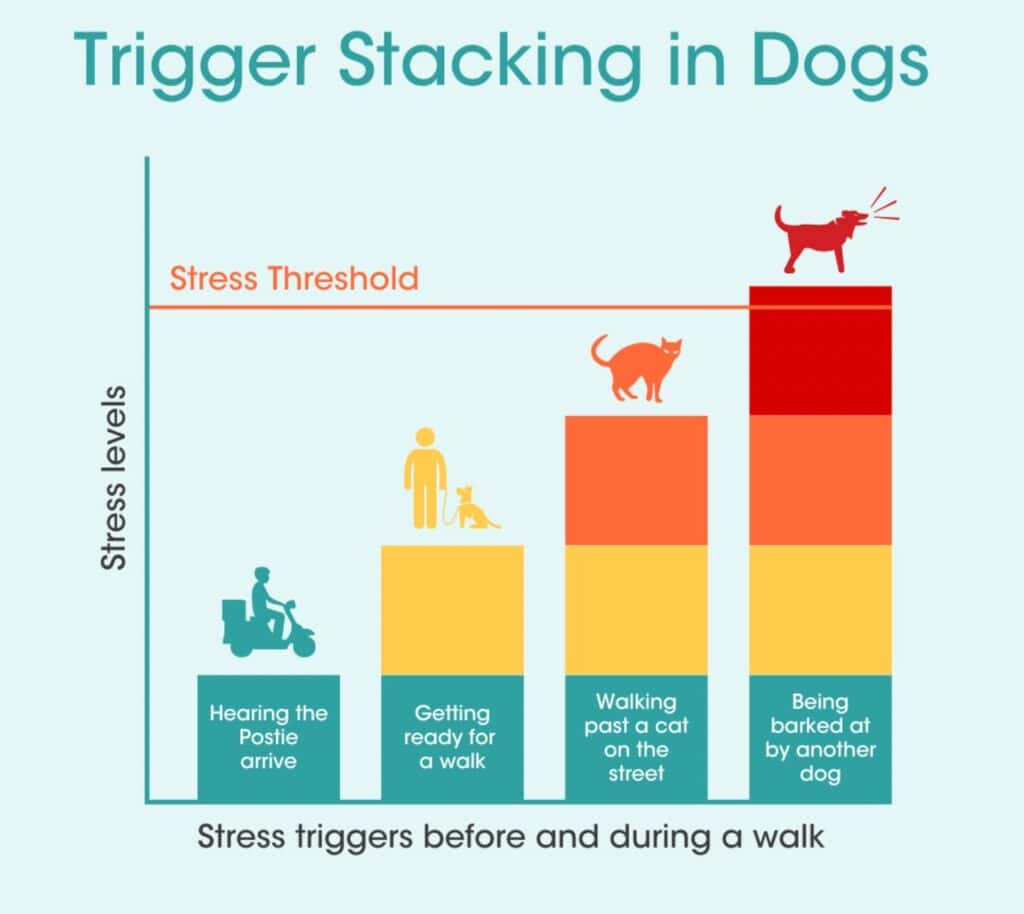
Trigger stacking occurs when a dog is exposed to multiple stressors within a short period of time, without sufficient opportunity to recover between them. Each individual trigger may be manageable on its own, but as they accumulate, the dog’s overall stress level increases until they reach a threshold where a behavioral response occurs.
Think of it like a bucket filling up — each stressor adds a little more. Once it overflows, you see behaviors like barking, lunging, shutting down, or inability to respond to cues.
Common triggers might include:
- Seeing other dogs or cars (even at a distance)
- Loud noises or sudden movement
- Repeated handling or transitions between handlers
- Barrier frustration (kennel doors, fences)
- High-arousal environments or busy times of day
A dog might handle one or two of these just fine — but stack several together, and you get a very different response.
How to identify trigger stacking
Recognizing early indicators is key to preventing escalation. Signs that a dog may be approaching threshold include:
- Increased environmental scanning or hypervigilance
- Reduced responsiveness to known cues
- Noticeable changes in body language (stiffness, closed mouth, change in tail position)
- Escalation in leash tension or movement speed
- Vocalization (whining, barking)
It is also important to note patterns over time. A dog who has already experienced multiple stressors earlier in the day may have a lower tolerance for additional challenges.
What we expect volunteers and staff to do
When you notice trigger stacking starting to build:
- Lower the difficulty immediately
Create distance from triggers, move to a quieter area, or end the walk early if needed - Shift focus to decompression, not training
This is not the moment to “push through” or test skills. Continuing to add challenges at this stage often results in further escalation - Keep interactions calm and predictable
Avoid adding more stimulation (extra handling, busy routes, etc) - Advocate for the dog
It’s okay to say “this is too much for them right now” and make a different choice - Document what you observed
Notes about patterns help us better support that dog moving forward, note it in the mobile app!! If the dog needs down time, place a temporary sign on their kennel to alert potential walkers for the day – add date and time.
Understanding trigger stacking allows us to interpret behavior more accurately, respond proactively and prevent possible escalation and bites. By recognizing when stress is building, we can make informed handling decisions that prioritize safety, welfare, and long-term behavioral progress for the dog, the handler and anyone else around.