

Skip to content
FOHA logo featuring silhouettes of a child, dog, horse, and cat, representing Friends of Homeless Animals' mission in animal rescue and adoption.
  • Pet Adoption
    • Adopt an Animal
    • Find a Dog
    • Find a Cat
    • Adoption Events
    • Adoption Policies, Procedures, and Fees
      • Dog Adoption Application
      • Cat Adoption Application
    • Senior Care Plan
    • Pet Adoption FAQ
    • Adoption Success Stories
  • Get Involved
    • Volunteer
      • Corporate Volunteering
      • Service Projects
      • Kids and Teens Volunteering
    • Foster a Dog or Cat
      • Pets Available to Foster
      • Foster Cat Application
      • Foster Dog Application
      • Pet Fostering FAQ
  • Ways to Give
    • Online Donations
    • FOHA Merchandise
    • FOHA Guardian
    • Sponsor a Pet
    • Engraved Brick Program
    • Corporate Sponsorship
    • Search Corporate Matching Programs
    • Donate Shelter Supplies
    • Additional Ways to Give
  • Resources
    • FOHA Blog
    • Event Calendar
    • Adopter Resources
      • Bringing Home Your Dog
      • Bringing Home Your New Cat
    • General FAQ
      • Surrender a Pet
      • What to Do When a Pet Is Lost
    • Forever in our Hearts
  • About Us
    • Contact Us
    • FOHA’s Mission, Story and No-Kill Philosophy
    • Leadership
    • The Treasure Hound Resale Shop
      • The Treasure Hound Donations
      • The Treasure Hound Frequent Shoppers
    • FOHA Facility
    • Impact and Financials
    • Awards and Recognition
    • FOHA Programs
  • Contact
  • The Treasure Hound Resale Shop
  • Make a Donation
Logo of Friends of Homeless Animals (FOHA) featuring stylized silhouettes of a dog, cat, and person, emphasizing animal rescue and adoption.
  • The Treasure Hound Resale Shop
  • Donate Now
  • Pet Adoption
    • Adopt an Animal
    • Find a Dog
    • Find a Cat
    • Adoption Events
    • Adoption Policies, Procedures, and Fees
      • Dog Adoption Application
      • Cat Adoption Application
    • Senior Care Plan
    • Pet Adoption FAQ
    • Adoption Success Stories
  • Get Involved
    • Volunteer
      • Corporate Volunteering
      • Service Projects
      • Kids and Teens Volunteering
    • Foster a Dog or Cat
      • Pets Available to Foster
      • Foster Cat Application
      • Foster Dog Application
      • Pet Fostering FAQ
  • Ways to Give
    • Online Donations
    • FOHA Merchandise
    • FOHA Guardian
    • Sponsor a Pet
    • Engraved Brick Program
    • Corporate Sponsorship
    • Search Corporate Matching Programs
    • Donate Shelter Supplies
    • Additional Ways to Give
  • Resources
    • FOHA Blog
    • Event Calendar
    • Adopter Resources
      • Bringing Home Your Dog
      • Bringing Home Your New Cat
    • General FAQ
      • Surrender a Pet
      • What to Do When a Pet Is Lost
    • Forever in our Hearts
  • About Us
    • Contact Us
    • FOHA’s Mission, Story and No-Kill Philosophy
    • Leadership
    • The Treasure Hound Resale Shop
      • The Treasure Hound Donations
      • The Treasure Hound Frequent Shoppers
    • FOHA Facility
    • Impact and Financials
    • Awards and Recognition
    • FOHA Programs
  • Contact
  • The Treasure Hound Resale Shop
  • Make a Donation

April 29, 2026

Introduction to Trigger Stacking

Posted in General Information
Share this
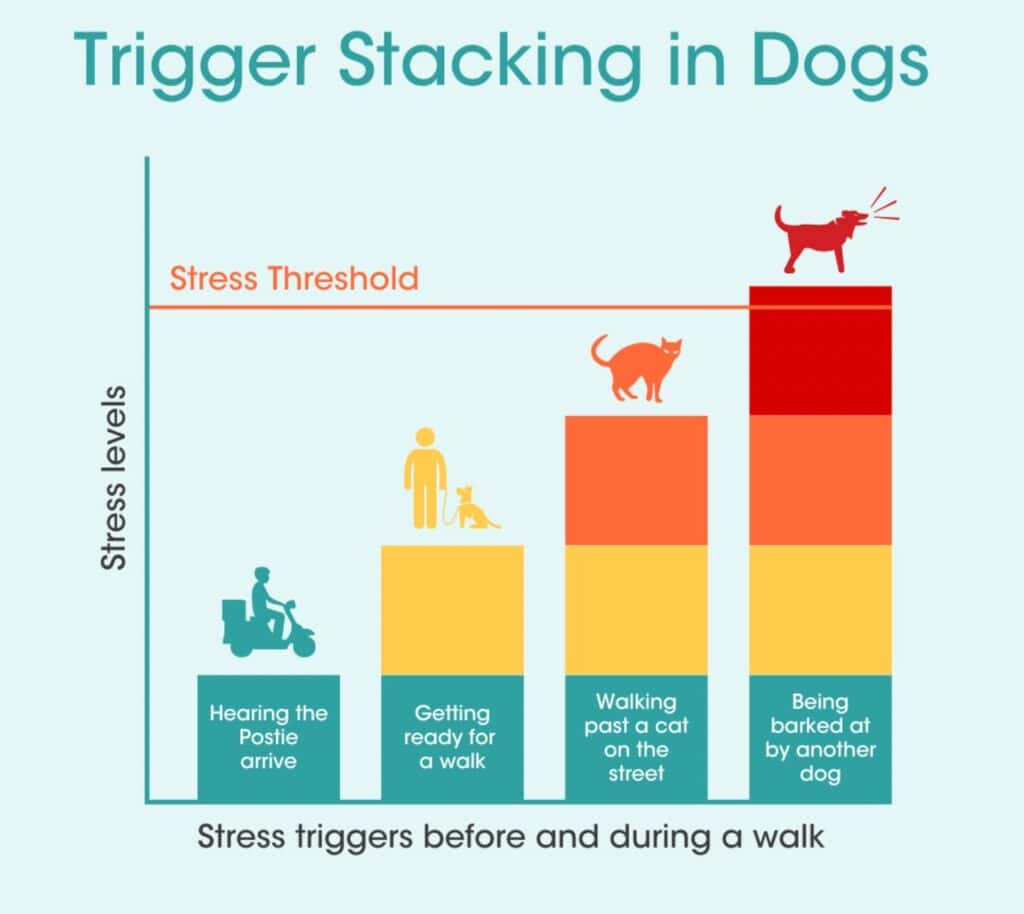
Trigger stacking in dogs infographic illustrating stress levels related to various triggers like hearing the postman, preparing for a walk, encountering a cat, and being barked at by another dog.

FOHA Safety and Risk: Understanding Trigger Stacking

At times, a dog’s reaction may seem sudden or disproportionate to the situation. In many cases, this is the result of trigger stacking, not a single isolated event.

What is trigger stacking?
Trigger stacking occurs when a dog is exposed to multiple stressors within a short period of time, without sufficient opportunity to recover between them. Each individual trigger may be manageable on its own, but as they accumulate, the dog’s overall stress level increases until they reach a threshold where a behavioral response occurs.

Think of it like a bucket filling up — each stressor adds a little more. Once it overflows, you see behaviors like barking, lunging, shutting down, or inability to respond to cues.

Common triggers might include:

  • Seeing other dogs or cars (even at a distance)
  • Loud noises or sudden movement
  • Repeated handling or transitions between handlers
  • Barrier frustration (kennel doors, fences)
  • High-arousal environments or busy times of day

A dog might handle one or two of these just fine — but stack several together, and you get a very different response.

How to identify trigger stacking

Recognizing early indicators is key to preventing escalation. Signs that a dog may be approaching threshold include:

  • Increased environmental scanning or hypervigilance
  • Reduced responsiveness to known cues
  • Noticeable changes in body language (stiffness, closed mouth, change in tail position)
  • Escalation in leash tension or movement speed
  • Vocalization (whining, barking)

It is also important to note patterns over time. A dog who has already experienced multiple stressors earlier in the day may have a lower tolerance for additional challenges.

What we expect volunteers and staff to do

When you notice trigger stacking starting to build:

  • Lower the difficulty immediately
    Create distance from triggers, move to a quieter area, or end the walk early if needed
  • Shift focus to decompression, not training
    This is not the moment to “push through” or test skills. Continuing to add challenges at this stage often results in further escalation
  • Keep interactions calm and predictable
    Avoid adding more stimulation (extra handling, busy routes, etc)
  • Advocate for the dog
    It’s okay to say “this is too much for them right now” and make a different choice
  • Document what you observed
    Notes about patterns help us better support that dog moving forward, note it in the mobile app!! If the dog needs down time, place a temporary sign on their kennel to alert potential walkers for the day – add date and time. 

Understanding trigger stacking allows us to interpret behavior more accurately, respond proactively and prevent possible escalation and bites. By recognizing when stress is building, we can make informed handling decisions that prioritize safety, welfare, and long-term behavioral progress for the dog, the handler and anyone else around.

Golden retriever wearing glasses, symbolizing the joy and personality of adopted pets featured in FOHA success stories.

Stay in the loop

Get updates about our adoptable dogs and cats, FOHA alumni, success stories, and events.
(P.S. - You can choose how often you want to hear from us. Also, we'll never share your email address.)

Friends of Homeless Animals (FOHA) logo featuring the acronym "FOHA" and the full name, emphasizing the organization's mission for animal rescue and adoption.

Friends of Homeless Animals
39710 Goodpuppy Lane
Aldie, VA 20105

703-385-0224
Contact Us

The Treasure Hound Resale Shop
14508-D Lee Rd
Chantilly, VA

703-263-9073
Learn More

  • Pet Adoption
  • Get Involved
  • Ways to Give
  • Resources
  • About Us
  • Blog
  • News
  • Careers
  • Sitemap
  • Privacy Policy
  • Accessibility Statement
Make a Donation
Platinum Transparency 2025 badge for Friends of Homeless Animals (FOHA), highlighting commitment to transparency and accountability in animal rescue and adoption.
Empty pixel image representing digital content, associated with Friends of Homeless Animals (FOHA) and pet adoption success stories.
United Way of the National Capital Area logo, featuring a stylized figure with arms raised in a sun, symbolizing community support and partnership with Friends of Homeless Animals (FOHA).

Copyright 2026 Friends of Homeless Animals EIN: 23-7355910
CFC #83554 | United Way #9822 | CVC #200305

Website by Yoko Co

Donate Now
Scroll To Top

Recognizing Common Triggers for Trigger Stacking

Understanding the common triggers that lead to trigger stacking is essential for effective dog behavior management. Triggers can vary widely from environmental factors like loud noises to social interactions with other dogs. Being aware of these triggers allows volunteers and staff to anticipate potential stressors and take proactive measures.

For instance, a dog may react negatively to seeing another dog from a distance or may become anxious in a busy environment with many people. By identifying these triggers, handlers can create a more controlled environment, reducing the likelihood of stress accumulation and ensuring a safer experience for both the dog and the handler.

Signs of Increasing Stress in Dogs

Recognizing the signs of increasing stress in dogs is crucial for timely intervention. Dogs often display subtle changes in behavior before reaching a threshold of stress, which can manifest through body language and vocalizations. Understanding these signs helps handlers to act before a situation escalates.

Common indicators include increased environmental scanning, reduced responsiveness to cues, and noticeable changes in body posture. For example, a dog that suddenly becomes hypervigilant or starts to exhibit stiff body language may be approaching its stress threshold. Early recognition of these signs can lead to effective management strategies that prioritize the dog's well-being.

Effective Strategies for Managing Trigger Stacking

Implementing effective strategies to manage trigger stacking can significantly improve a dog's experience during stressful situations. These strategies involve immediate actions that handlers can take to alleviate stress and prevent escalation. By focusing on the dog's needs, handlers can create a more positive environment.

For example, when noticing signs of trigger stacking, handlers should lower the difficulty of the situation by creating distance from the triggers or moving to a quieter area. Additionally, shifting focus to decompression rather than training during high-stress moments is essential. This approach allows the dog to relax and reduces the likelihood of negative behavioral responses.

The Importance of Documentation in Behavior Management

Documentation plays a vital role in effectively managing dog behavior and understanding individual needs. Keeping detailed notes about observed patterns of behavior helps volunteers and staff to track a dog's reactions over time and make informed decisions about their care. This practice not only benefits the individual dog but also contributes to the overall knowledge base of the organization.

For instance, noting specific triggers that lead to stress or documenting successful strategies used in the past can guide future interactions. Utilizing tools like a mobile app for recording observations ensures that all team members are informed and can work collaboratively to support the dog's well-being, fostering a more effective and compassionate approach to animal care.